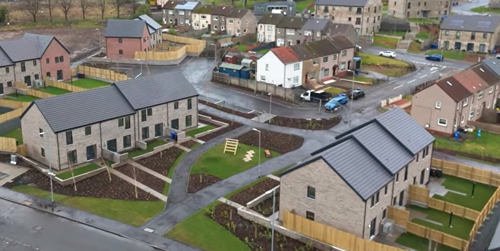

More than six months after the Housing Act came into force, Scotland’s public sector has strengthened its implementation of homelessness prevention measures, adopted more robust approaches to tenant safety, introduced enhanced rent controls, and expanded crisis intervention services to ensure that those affected are treated with the dignity, care, and protection they deserve.
Yet the scale of Scotland’s housing challenge remains stark. Around 250,000 people remain on waiting lists for social housing, while 14 of Scotland’s 32 local authorities continue to be in a state of housing emergency. An ageing housing stock, facing issues ranging from RAAC to damp and mould, combined with a shortage of viable development land, underscores the need for a systematic overhaul of the housing system to protect, improve, and sustain Scotland’s homes and buildings for future generations.
Two years since the Scottish Government declared a housing emergency, SFHA’s Annual Conference 2026 reinstated the clear, urgent challenges facing Scotland’s housing sector and the need for a fair, balanced, and sustainable housing system.
Voicing the need to take collaborative action, the two-day event brought together Scotland’s housing leaders to discuss the newly published sector manifesto, and economic narrative of Scotland’s housing landscape. Discussions extended beyond supply, examining the role of homes in improving public health, community resilience and regeneration across both rural and urban areas, and the opportunities presented by the evolving role of artificial intelligence.


Each meaningful discussion brought home the uncertainty facing Scotland’s housing sector, amid declining funding streams, evolving net zero standards and compliance regulations. A comprehensive approach that utilises every available lever of support is needed to accelerate delivery, including the adoption of transparent, efficient, and cost-effective procurement routes.
Over the past decade, SPA has grown to become one of Scotland’s preferred procurement providers, trusted by more than 145 leading public sector organisations to simplify and accelerate the compliant delivery of high-quality, sustainable projects. From delivering new homes and maintaining asset compliance to installing energy-efficiency upgrades and remediating existing homes and buildings, each solution has been developed collaboratively to respond to the evolving needs, priorities, and challenges facing the public sector.
Protecting Scotland’s Housing Stock
As Scotland’s existing housing stock faces growing challenges from high-risk cladding, RAAC, stonework deterioration, and the urgent need to remediate damp and mould, maintaining the safety, quality, and habitability of homes through responsive intervention measures has become an immediate priority.
While retaining the core maintenance services delivered through our Refurbishment and Modernisation framework (RM3), the new iteration of this framework (RM4) represents a shift towards a whole-asset management strategy. With dedicated workstreams covering damp and mould remediation, aids and adaptations, stonework conservation, and multidisciplinary reactive maintenance, RM4 provides public sector partners with streamlined access to the specialist suppliers needed to protect, improve, and future-proof Scotland’s homes and buildings.

Developing Rural Communities
While the regeneration of rural areas was identified as an increasingly important priority, so too was the need for infrastructure that supports skills development and creates opportunities for wealth to be generated and retained within communities for future generations.
SPA’s Public Buildings and Infrastructure framework (PB3) is evolving into PB4 to support the delivery of schools, healthcare facilities, and public buildings of all scales. In addition to improving access to essential infrastructure, SPA frameworks are designed to deliver meaningful community benefit and social value. This ensures that each project contributes to a lasting legacy, creating opportunities for employment, apprenticeships, and skills development that help communities grow, thrive, and remain resilient.
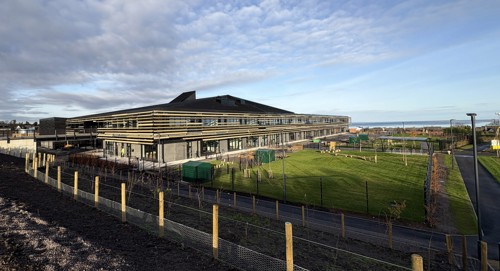
Delivering New Build Housing
Alongside preserving existing housing stock, the conference shed light on the role of targeted regeneration, transforming unusable ‘brownfield’ sites into communities with a new lease of life.
Designed to support complex developments, SPA’s Housing, Regeneration and Demolition (H3) framework covers site preparation, demolition, remediation, and new build schemes. In addition to supporting compliance with net zero requirements, the framework promotes a community-led approach by safeguarding opportunities for local SMEs and embedding community benefit delivery through early planning stages.